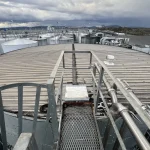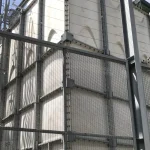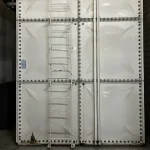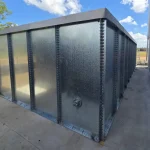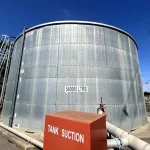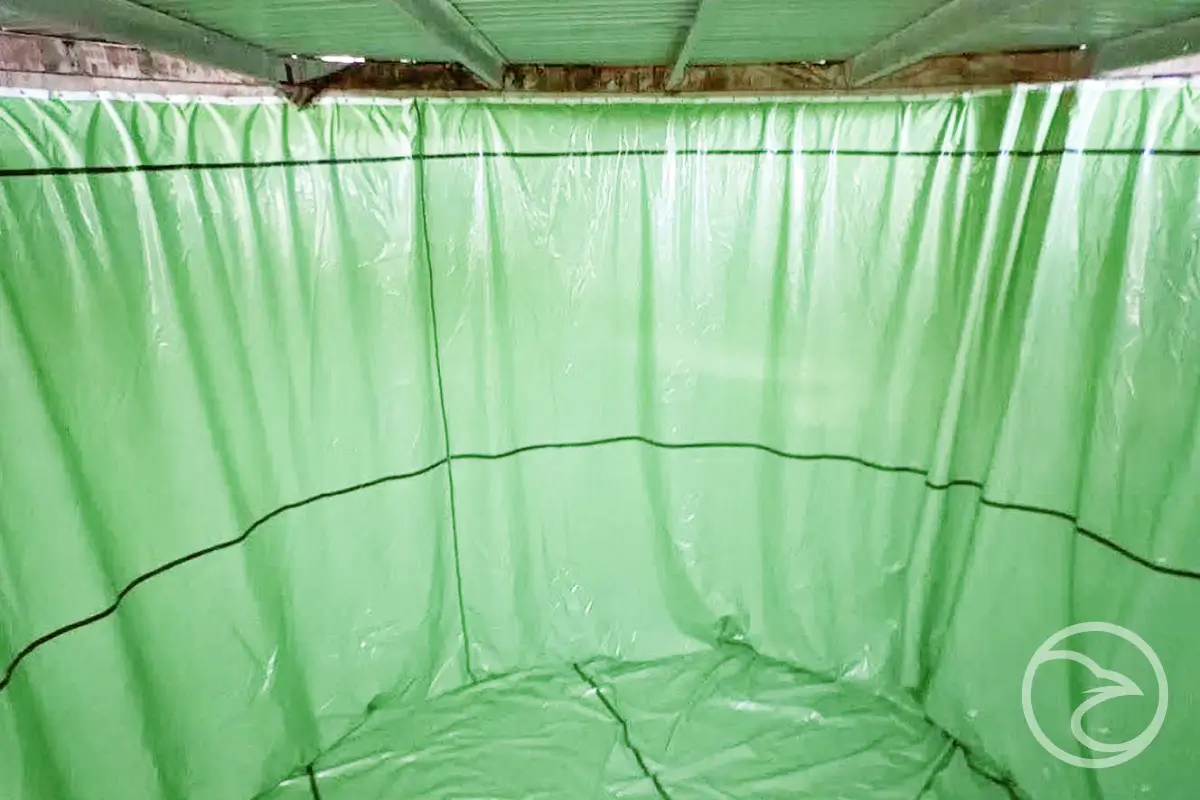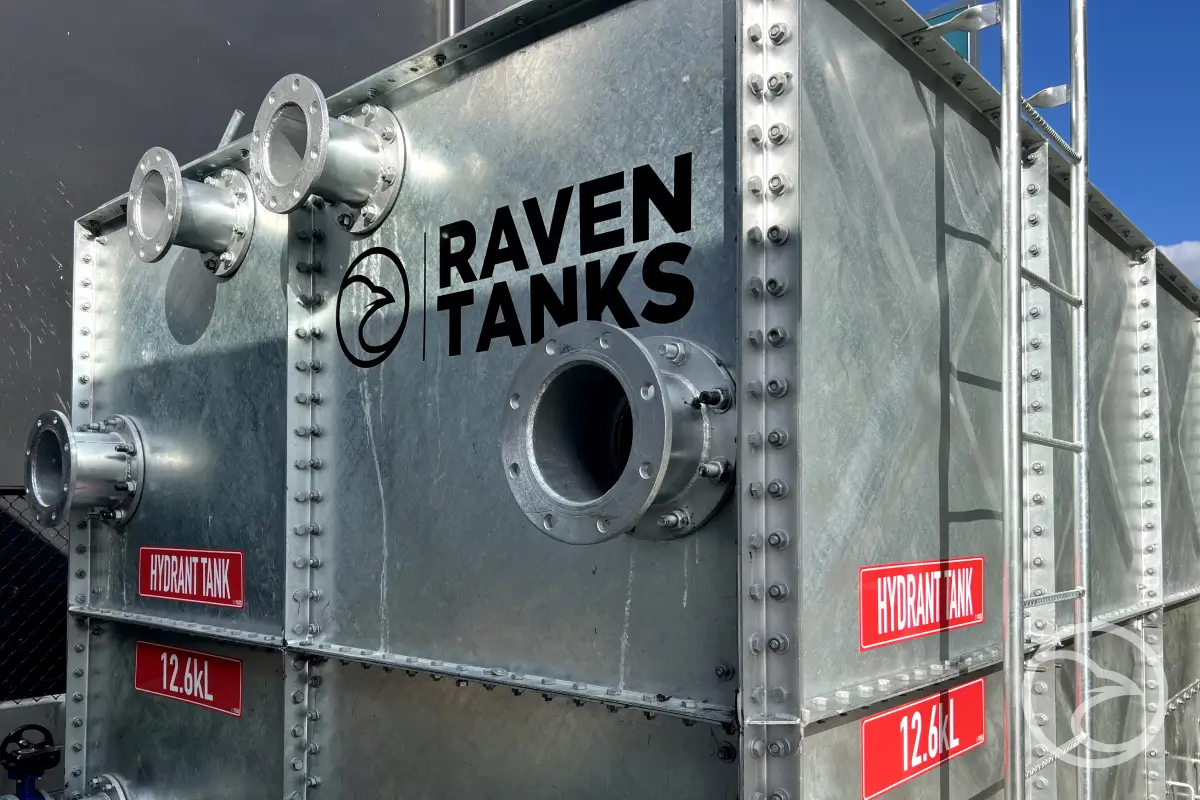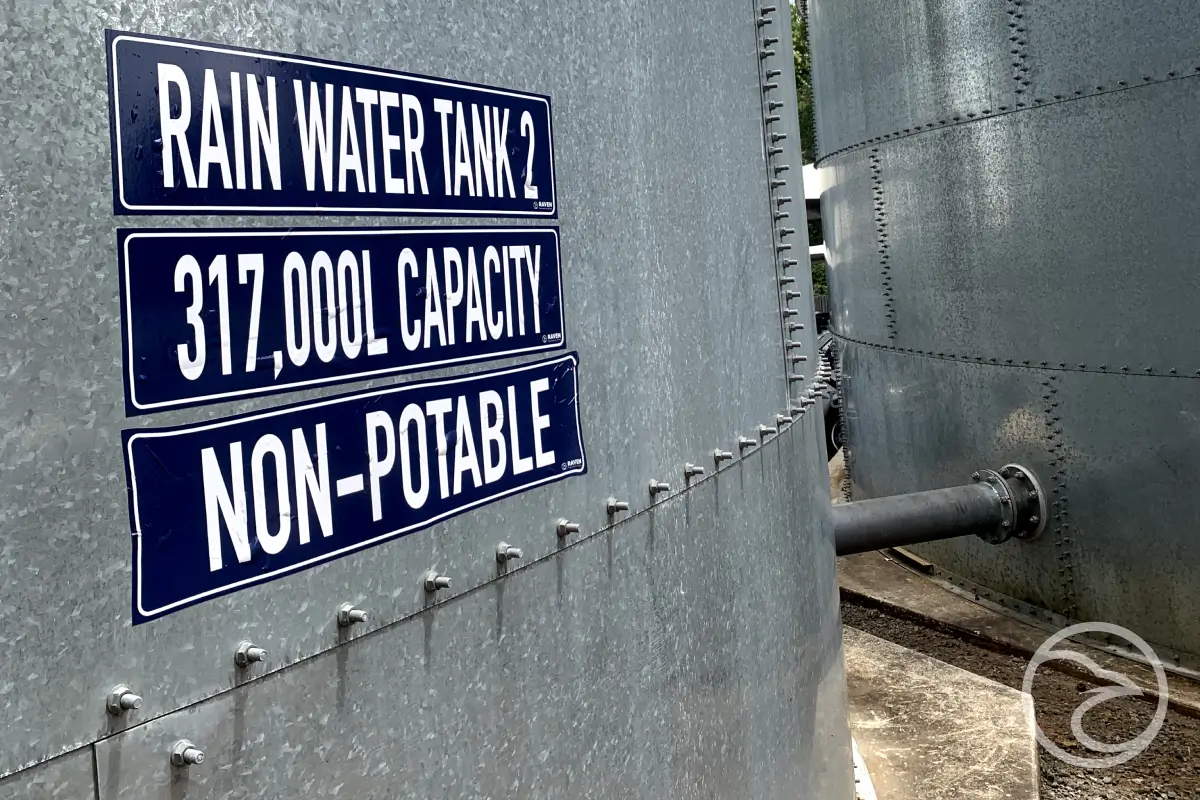
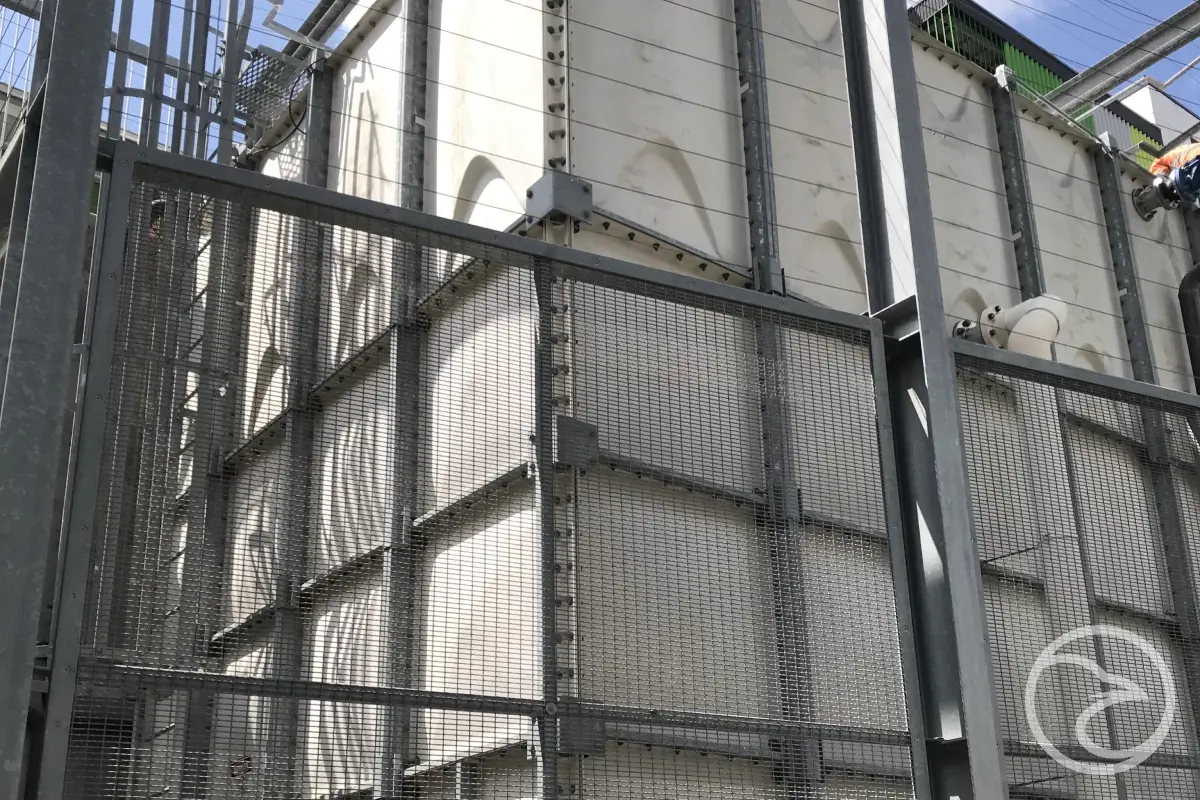
Fiberglass panel tanks are modular storage systems made from fiberglass-reinforced materials. They are commonly used for storing water and other compatible liquids. The tank consists of individual panels assembled into a complete storage structure. This modular design allows different tank sizes and configurations.
Fiberglass materials also provide natural resistance to corrosion. This characteristic makes these tanks useful in environments where steel corrosion may become a concern. However, no tank material is suitable for every application.
The stored liquid, temperature, location, capacity, and operating conditions all affect material selection. Understanding these factors helps facility owners choose suitable storage systems.
This guide explains where fiberglass panel tanks are commonly used. It also covers their advantages, limitations, maintenance, inspection, and repair considerations.
What are Fiberglass Panel Tanks?
Fiberglass panel tanks are assembled from prefabricated fiberglass-reinforced panels. These panels are usually manufactured under controlled conditions before arriving at the installation site. They are then connected to create the required tank dimensions.
The modular structure provides considerable flexibility.
Tanks can be designed around:
- Required storage capacity
- Available installation space
- Building dimensions
- Access limitations
- Operational requirements
- Stored liquid characteristics
- Indoor or outdoor locations
Unlike conventional welded steel tanks, fiberglass panels do not depend on a metallic surface for corrosion protection. This difference can become important in humid, coastal, industrial, or chemically aggressive environments.
Fiberglass panel tanks, also known as GRP panel tanks, are modular storage systems made from glass-reinforced plastic panels.
Fiberglass is also relatively lightweight compared with many traditional tank materials. The reduced panel weight can simplify transportation and installation, especially where site access is restricted.
Key Benefits of GRP Water Storage Tanks
The suitability of a tank depends on its application. However, several fiberglass properties explain its use across different industries.
Corrosion Resistance
Fiberglass does not rust like carbon steel. This can reduce problems associated with surface corrosion in wet environments. It can also be useful around salt, moisture, and some chemicals.
Chemical resistance still depends on the specific fiberglass system and stored substance.
Modular Construction
Panel construction allows tanks to be assembled in different shapes and capacities. This flexibility is particularly useful inside buildings or locations with restricted access.
Individual panels can often pass through openings that would prevent access for a complete prefabricated tank.
Relatively Low Weight
Fiberglass components generally weigh less than comparable concrete or heavy steel structures. Lower component weight can simplify handling and transportation.
Structural requirements still depend on the complete tank design and water load.
Smooth Internal Surfaces
Fiberglass systems can provide relatively smooth internal surfaces. This can support cleaning and routine maintenance when the tank stores suitable liquids.
Broad Application Range
Fiberglass panel tanks can serve several storage applications.
Common examples include:
- Fire protection water
- Potable water
- Commercial building water
- Industrial process water
- Agricultural water
- Compatible chemicals
- Treatment systems
- Emergency water reserves
Each application has different design and maintenance requirements. Facility owners can also review this complete guide to GRP tanks for more information about their design, benefits, and common applications.
Where are Fiberglass Panel Tanks Commonly Used?
GRP water tanks appear across commercial, industrial, agricultural, and infrastructure facilities. Their modular construction is particularly useful where large conventional tanks cannot easily reach the installation area. Corrosion resistance is another important consideration.
Facilities may consider fiberglass where persistent moisture or aggressive environments could affect unprotected metallic materials. However, material selection should always follow the actual application.
The following sections explain how fiberglass performs in common storage situations.
Fiberglass Panel Tanks for Fire Protection Water
Fire protection systems often require a dedicated water reserve. A storage tank may supply sprinklers, hydrants, pumps, or other fire protection equipment during an emergency. Reliability is therefore essential.
Fiberglass panel tanks can be considered for fire water storage where their construction meets applicable system requirements.
Their corrosion resistance can be valuable because fire water may remain stored for extended periods. Steel tanks can provide excellent structural performance for fire protection applications. However, corrosion protection requires ongoing attention.
Fiberglass does not experience rust in the same way. This can make fiberglass useful in humid environments or locations where corrosion exposure is an important design concern.
For fire protection applications, facility owners should consider:
- Required usable water capacity
- Fire pump requirements
- Tank connections
- Overflow arrangements
- Access for inspections
- Internal condition
- Applicable fire protection standards
- Local regulatory requirements
The tank material alone does not determine fire system reliability. The complete installation must support the required fire protection performance.
GRP Panel Tanks for Potable Water Storage
Potable water storage requires careful material selection. Any surface contacting drinking water must be appropriate for that application and meet relevant requirements. Fiberglass panel tanks can be used for potable water when the complete tank system is designed accordingly.
Corrosion resistance can be beneficial because the stored water does not contact rusting carbon steel surfaces. Smooth internal surfaces can also support cleaning and sanitation programs.
Important considerations include:
- Approved materials for drinking water contact
- Sealed access points
- Suitable covers
- Vent protection
- Clean internal surfaces
- Drainage arrangements
- Regular inspections
- Scheduled cleaning
Water quality depends on more than the tank material. Poor maintenance, damaged seals, contaminated openings, or sediment can affect any storage tank.
Regular inspection remains necessary even when corrosion risk is low.
Commercial Building Water Storage
Commercial properties may require stored water for several building services. Applications can include domestic supply, utility water, emergency reserves, or other building systems. GRP tanks are particularly useful where available space influences tank selection.
For example, a building may have a plant room with limited door access. Transporting one large prefabricated tank into that space may be impossible.
Individual fiberglass panels can be moved separately and assembled at the final location.
This approach can suit:
- Office buildings
- Hotels
- Shopping centres
- Hospitals
- Apartment buildings
- Educational facilities
- Mixed-use developments
Modular construction also allows the tank dimensions to reflect the available room. However, access around the completed tank should still support inspection and maintenance.
A tank that fits physically may not provide sufficient service access.
Industrial Water Storage
Industrial facilities often require water storage for processes unrelated to drinking water. Examples include process water, wash water, cooling systems, manufacturing operations, and general utility water.
Fiberglass panel tanks can provide a practical option for some of these applications. Corrosion resistance is often particularly relevant in industrial environments.
Humidity, airborne contaminants, and process chemicals can create aggressive conditions around storage equipment. Fiberglass eliminates conventional rusting of the tank panels.
However, industrial water can vary significantly in composition. Temperature, dissolved chemicals, pH, solids, and process contamination should be considered before selecting tank materials.
For industrial applications, the assessment should include:
- Water chemistry
- Operating temperature
- Required capacity
- Filling and discharge rates
- Chemical exposure
- Cleaning requirements
- Process reliability
- Inspection access
Fiberglass may perform well when these conditions remain compatible with the selected material system.
Chemical Storage Applications
Chemical storage requires more careful material assessment than general water storage. Fiberglass materials can resist many corrosive substances. However, fiberglass is not universally resistant to every chemical.
Different resins and fiberglass systems have different compatibility characteristics.
The stored chemical can affect:
- Resin selection
- Panel construction
- Seals
- Gaskets
- Fittings
- Internal components
- Service temperature
Chemical concentration is also important. A material suitable for a dilute solution may not perform identically at higher concentrations.
Temperature can further influence chemical compatibility. Therefore, chemical storage suitability should be confirmed for the exact substance and operating conditions. Compared with ordinary carbon steel, fiberglass can provide an advantage where corrosion is a major concern.
Specialty metals and lined steel tanks can also handle aggressive substances. The appropriate choice depends on chemical compatibility, structural requirements, temperature, and maintenance expectations.
Agricultural Water Storage
Agricultural facilities often require substantial water reserves. Water may be needed for irrigation, livestock, equipment washing, processing, or general farm operations. Fiberglass panel tanks can support these applications when suitable for the stored water.
Their modular design allows storage capacity to be adapted to site requirements. Corrosion resistance can also help in outdoor or humid agricultural environments.
Potential applications include:
- Irrigation water
- Livestock water
- Wash-down water
- Rainwater storage
- Backup water supplies
- Agricultural processing water
Outdoor installations require additional consideration. UV exposure, weather conditions, foundations, wind loads, and temperature variations can influence tank design.
The water source should also be considered. Sediment, minerals, organic material, and other contaminants may increase cleaning requirements.
Wastewater and Water Treatment Applications
Water treatment facilities can expose storage equipment to challenging conditions. High humidity and chemical exposure may accelerate corrosion in some metallic systems.
Fiberglass can therefore be useful for selected treatment applications.
Possible uses include storage associated with:
- Treatment processes
- Process water
- Reuse water
- Wash water
- Certain compatible treatment chemicals
Wastewater applications require careful assessment because liquid composition can vary significantly. Chemical concentration, biological activity, temperature, and solids may affect material suitability.
Fiberglass should therefore be selected based on the actual service conditions. The same principle applies to gaskets, connections, and other tank components.
A chemically resistant panel does not automatically make every component suitable for the same environment.
Emergency and Backup Water Storage
Some facilities maintain stored water for disruptions to normal supply. This reserve may support essential building services or operational continuity.
GRP tanks can be used for these systems because they can store substantial volumes within a modular structure. They can also be installed in locations where conventional large tanks are difficult to position.
Emergency storage systems require attention to water turnover. Long storage periods may influence water quality and sediment accumulation.
Facility owners should establish procedures covering:
- Water replacement
- Tank inspection
- Cleaning
- Level monitoring
- Valve operation
- Connection condition
- Emergency access
A backup tank is only useful when the stored water and associated equipment remain serviceable.
Rainwater Harvesting and Non-Potable Water
Rainwater collection systems can reduce reliance on mains water for suitable non-potable applications. Stored rainwater may supply irrigation, cleaning, toilet flushing, or other approved uses. Fiberglass panel tanks can provide larger storage capacities for commercial rainwater harvesting systems.
Their corrosion resistance is useful because rainwater conditions can vary. However, tank condition is only one part of rainwater management.
The system may also require:
- Inlet screening
- First-flush management
- Overflow control
- Sediment management
- Protected access
- Regular cleaning
- Water quality monitoring where required
Collected water should only be used for applications permitted by local requirements.
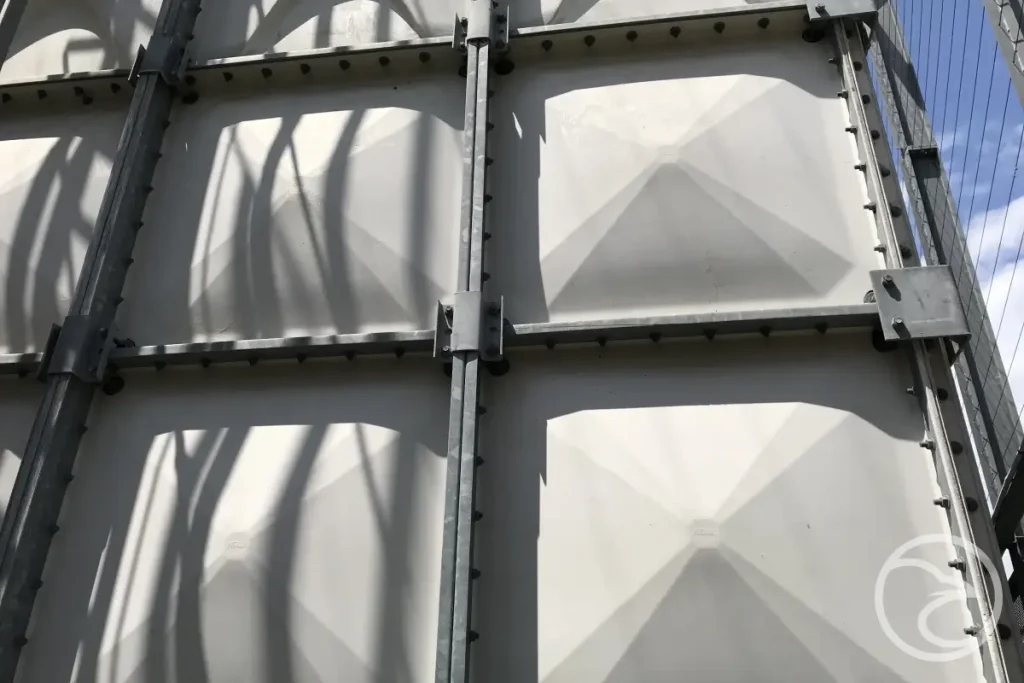
Fiberglass Tanks in Coastal and High-Humidity Environments
Location can sometimes influence tank material as much as the stored liquid. Coastal environments can expose equipment to moisture and airborne salts. These conditions can increase corrosion concerns for metallic equipment.
Fiberglass does not rust through conventional oxidation. This characteristic can make it attractive where external corrosion exposure is significant. Similar considerations apply to consistently humid plant rooms.
Condensation and limited ventilation can create persistent moisture around storage systems. Fiberglass may reduce one major corrosion mechanism in these locations. However, connections, fasteners, supports, and other components still require suitable material selection.
The entire tank system should be assessed rather than only the panels.
Fiberglass vs Steel Tanks for Common Applications
Fiberglass and steel can both provide reliable liquid storage. Their suitability depends on the application rather than one material being universally better.
Steel offers high structural strength and has a long history across water and fire protection applications. Protective coatings or galvanizing can help control corrosion.
However, those protective systems require appropriate inspection and maintenance. Fiberglass provides inherent resistance to rust. This can be useful where water, humidity, salts, or compatible chemicals create corrosion concerns.
Fiberglass may be particularly attractive for:
- Humid environments
- Coastal locations
- Restricted-access installations
- Corrosive surroundings
- Some chemical applications
- Modular indoor installations
Steel may be preferred where specific structural, temperature, regulatory, or operational requirements favour metallic construction. The decision should reflect the complete service environment.
Fiberglass vs Concrete Tanks
Concrete is widely used for large water storage structures. It can provide substantial capacity and strong structural performance. However, concrete tanks are heavy and generally require significant site preparation.
Cracking, joint condition, and internal surface deterioration can also require monitoring. Fiberglass panel systems are much lighter at the component level. Their modular nature can simplify installation where access is restricted.
Fiberglass also does not experience concrete cracking mechanisms. However, concrete may remain appropriate for very large permanent storage structures.
Site conditions, capacity, access, cost, and intended service should guide the comparison.
Why Material Selection Changes Between Applications
The same tank material can perform differently under different operating conditions. For this reason, selecting fiberglass should involve more than checking required capacity.
Important variables include the stored liquid and surrounding environment.
Chemical Exposure
Fiberglass resistance depends on the resin system and chemical involved. Chemical compatibility should always be verified for chemical storage.
Temperature
Operating temperature can affect material performance. Higher temperatures may change the suitability of particular resin systems, seals, or other components.
UV Exposure
Outdoor tanks can experience continuous sunlight. Materials and external surfaces should therefore be appropriate for long-term outdoor exposure.
Water Quality
Potable water, process water, rainwater, and wastewater have different storage requirements. Material selection should reflect those differences.
Structural Conditions
Water is heavy regardless of the tank material. Foundations and supporting structures must accommodate the full operating load.
Wind, seismic conditions, and other site loads may also require consideration.
Maintenance of Fiberglass Panel Tanks
Fiberglass tanks are corrosion-resistant, but they are not maintenance-free. Routine maintenance helps identify developing problems before they affect tank performance.
A maintenance program may include:
- Checking external panel condition
- Examining joints and seals
- Monitoring connections
- Checking valves
- Inspecting access openings
- Removing sediment where necessary
- Cleaning internal surfaces
- Checking supports and foundations
Maintenance frequency depends on the application and operating environment. A potable water tank may have different maintenance requirements from an industrial process tank.
Chemical tanks may require application-specific procedures. Maintenance records can also help facility owners identify recurring problems.
Changes in leakage, seal condition, staining, or structural movement should not be ignored.
Inspection of GRP Panel Tanks
Regular inspections provide information about the tank’s actual condition. External inspections can identify visible changes without taking the tank out of service.
Inspectors may examine:
- Panel surfaces
- Joints
- Bolted connections
- Bolted connections
- External fittings
- Signs of leakage
- Structural supports
- Foundation condition
- Roof components
- Access points
Internal inspections can provide additional information when safe access is possible. Internal surfaces may be checked for damage, deposits, joint deterioration, or other changes. Inspection methods should reflect the tank’s purpose.
Understanding why GRP tanks fail can help facility owners recognise how installation issues, ageing, structural movement, and environmental exposure affect tank condition.
Common Fiberglass Panel Tank Repairs
Fiberglass water tanks can sometimes be repaired without replacing the complete storage system. The appropriate repair depends on the type and extent of damage.
Potential repair areas include:
- Damaged panel surfaces
- Joint deterioration
- Failed seals
- Leaking connections
- Localised fiberglass damage
- Damaged fittings
- Roof or access components
A small sealing problem differs significantly from structural panel damage. The cause should be identified before selecting a repair method. Simply sealing visible leakage may not correct an underlying structural or joint problem.
Repairs should also remain compatible with the stored liquid. This is particularly important for potable water and chemical storage applications.
Professional fiberglass tank repair may be required when inspections identify damaged panels, deteriorated joints, leaks, or other defects affecting tank performance.
Which Applications Benefit Most From Fiberglass Panel Tanks?
Fiberglass panel water tanks can be especially useful when corrosion resistance and modular construction are important.
They may provide practical advantages for:
- Water storage in humid environments
- Coastal facilities
- Restricted-access plant rooms
- Commercial building water systems
- Selected fire protection systems
- Industrial process water
- Compatible chemical storage
- Agricultural water
- Rainwater harvesting
- Treatment facilities
However, these advantages should be evaluated against application-specific requirements. For example, corrosion resistance may strongly favour fiberglass in one facility. Another site may place greater importance on temperature resistance or specific structural requirements.
Chemical storage introduces additional compatibility considerations. Fire protection storage introduces regulatory and reliability requirements. Potable water introduces hygiene and material approval requirements.
There is therefore no single tank material that is automatically best for every facility.
Final Considerations
Fiberglass panel water tanks provide a versatile storage option across many water and liquid applications. Their main characteristics include corrosion resistance, modular construction, relatively low panel weight, and adaptable configurations. These characteristics can be useful for fire water, potable water, industrial processes, agriculture, and commercial building systems.
Fiberglass can also suit some chemical and treatment applications when material compatibility is confirmed. However, tank selection should always reflect the complete operating environment. The stored liquid, temperature, location, structural loads, access, and regulatory requirements all influence suitability.
Maintenance remains important despite fiberglass’s resistance to rust. Regular inspections can identify damaged seals, joints, fittings, panels, or supporting components before problems become more serious. When repairs are required, they should address both the visible damage and its underlying cause.
Understanding these factors helps facility owners evaluate fiberglass panel tanks based on application requirements rather than material characteristics alone.