Fuel storage facilities need reliable protection against leaks and accidental spills. Even well-maintained tanks can develop problems over time.
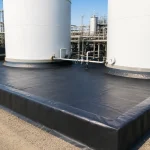
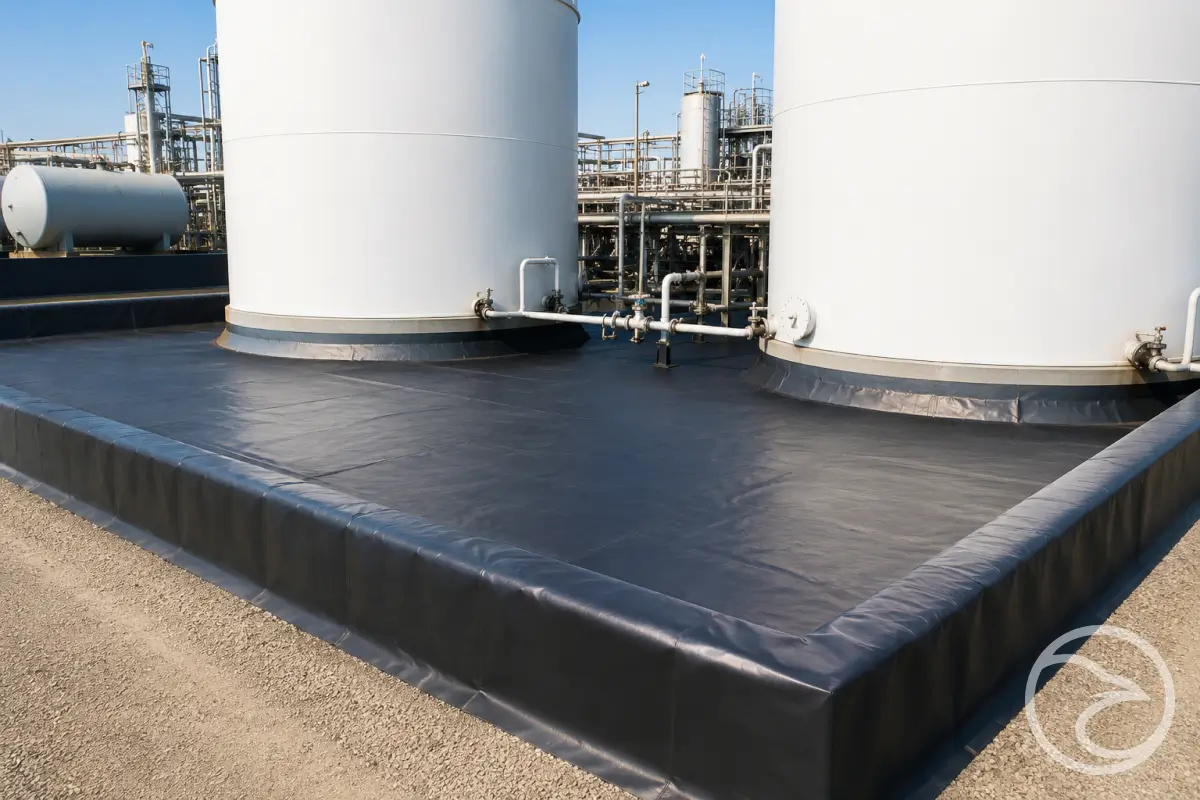
A fuel containment liner creates a protective barrier within a secondary containment area. It helps prevent spilled fuel from reaching surrounding soil and drainage systems.
However, not every liner material is suitable for petroleum products. Gasoline, diesel, and other fuels have different chemical properties. Choosing the right liner requires more than comparing thickness or installation costs. Chemical compatibility, site conditions, and containment design all affect performance.
This guide explains common liner materials, important selection factors, and practical considerations for commercial and industrial fuel storage.
What are Secondary Containment Liners for Fuel Storage?
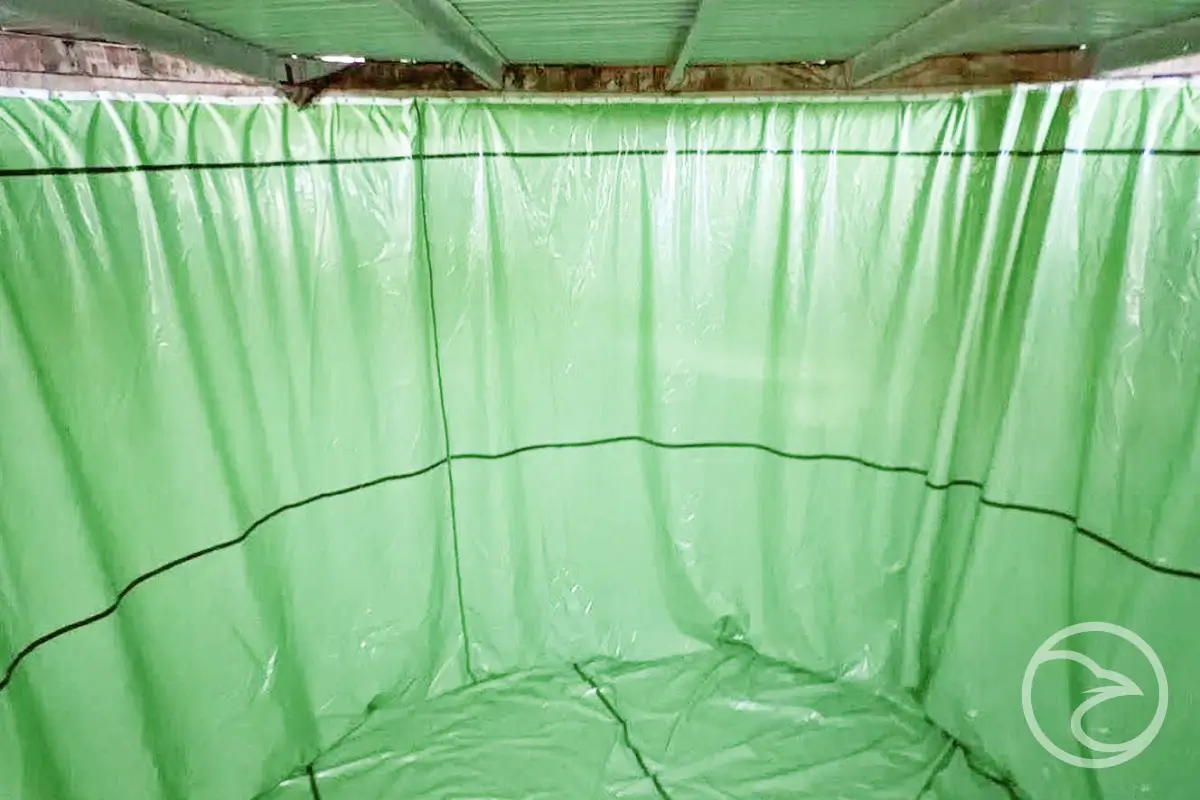
Secondary containment liners are protective membranes installed within areas designed to capture accidental fuel releases. They provide an additional barrier when a primary storage tank, pipe, or connection leaks.
These liners are commonly used beneath tanks, inside containment berms, and across designated fuel handling areas.
A typical fuel containment system includes several components:
-
Primary storage tanks holding gasoline, diesel, or other petroleum products.
-
Containment walls, berms, or structures that restrict the movement of spilled liquids.
-
A protective liner that limits fuel migration through the containment surface.
-
Drainage controls that manage accumulated rainwater and other liquids.
-
Inspection access for identifying damage or accumulated fuel.
The liner works alongside these components rather than replacing them. For example, a containment berm may prevent spilled diesel from spreading across a facility. Its liner helps prevent the liquid from penetrating the underlying ground.
Secondary containment liners for fuel storage can also support spill management around multiple tanks. Their suitability depends on the stored fuel, expected exposure, and overall containment design.
Why Fuel Storage Facilities Need Secondary Containment
Fuel storage operations involve several potential sources of accidental releases. Leaks can develop around tank connections, valves, transfer equipment, and damaged storage containers.
Spills may also occur during deliveries, maintenance, or routine fuel handling. Without suitable containment, released fuel can spread beyond the immediate storage area.
This creates environmental, operational, and cleanup concerns.
Protecting Soil and Groundwater
Petroleum products can migrate through unprotected ground after a spill. A properly selected containment liner helps restrict this movement.
However, its effectiveness depends on chemical resistance, installation quality, and the integrity of the entire containment system. A damaged or incompatible liner may allow fuel to escape.
Supporting Spill Cleanup
Secondary containment keeps released liquids within a designated area. This can make spill identification, recovery, and cleanup more manageable.
Containment also helps prevent fuel from reaching nearby stormwater drainage systems.
Reducing Operational Disruptions
An uncontrolled spill may interrupt fuel deliveries, equipment operation, or site access. A functioning containment system helps limit the affected area.
It does not eliminate spill risks, but it provides an additional layer of protection.
Supporting Regulatory Compliance
Certain US facilities must maintain secondary containment under the EPA’s Spill Prevention, Control, and Countermeasure (SPCC) regulations. These requirements depend on facility characteristics, stored oil quantities, and applicable regulatory provisions.
Other state and local requirements may also apply.
Common Materials used for Fuel Containment Liners
Material selection is one of the most important decisions when planning fuel containment. Different geomembranes offer different levels of chemical resistance, flexibility, and environmental durability.
The following materials are commonly considered for industrial containment applications. However, material names alone cannot establish fuel compatibility.
| Material | General characteristics | Important consideration |
|---|---|---|
| HDPE | Relatively rigid, with strong chemical resistance to many substances | Fuel-specific compatibility and seam design |
| LLDPE | More flexible than HDPE | Product formulation and chemical exposure |
| Reinforced polyethylene | Reinforcement can improve dimensional stability and strength | Coating chemistry and fuel compatibility |
| PVC | Flexible and adaptable to complex surfaces | Plasticizer compatibility and petroleum exposure |
| Specialty geomembranes | Formulated for particular industrial applications | Manufacturer testing and approved exposure conditions |
High-Density Polyethylene (HDPE)
HDPE geomembranes are widely used in industrial containment applications. They offer relatively high stiffness, low permeability, and resistance to many chemicals.
These characteristics can make HDPE useful for certain fuel containment installations. However, petroleum compatibility must be verified for the exact product.
Fuel composition, temperature, and exposure duration can affect material performance. HDPE also requires careful installation around corners, penetrations, and irregular surfaces.
Its relatively rigid structure may be less convenient for complex containment layouts.
Linear Low-Density Polyethylene (LLDPE)
LLDPE geomembranes generally offer greater flexibility than HDPE. This flexibility can help accommodate uneven surfaces and complex containment shapes.
LLDPE may also be useful where the liner must tolerate limited ground movement. However, flexibility does not automatically mean better chemical resistance.
Some fuels or additives may affect particular polyethylene formulations. The selected product should have documented compatibility with the expected liquids.
Reinforced Polyethylene Liners
Reinforced polyethylene liners combine polymer layers with a reinforcing structure. The reinforcement can improve tensile strength and dimensional stability.
These properties may be useful in certain exposed containment applications. However, different reinforced products use different coatings and polymer formulations.
Their chemical resistance can vary considerably. A reinforced liner should only be selected after reviewing its fuel-specific performance information.
Polyvinyl Chloride (PVC) Liners
PVC liners are flexible and can conform to irregular containment surfaces. They are used in several water storage and industrial containment applications.
However, standard PVC formulations may not tolerate prolonged exposure to certain petroleum products. Fuel contact can affect plasticizers and other components within some PVC materials.
This may cause changes in flexibility, dimensions, or mechanical performance. Specialized formulations may offer different resistance characteristics.
Always confirm the manufacturer’s compatibility data before considering PVC for fuel containment.
Understanding the properties of PVC tank liners types helps explain why material formulation matters across different storage applications.
Specialty Chemical-Resistant Geomembranes
Some containment applications require specially formulated membranes. These products may use modified polymers or other materials designed for particular chemicals.
They can be considered when standard geomembranes do not meet the project’s requirements. However, specialized products still require documented testing.
A liner described as chemical-resistant is not necessarily suitable for every petroleum product. The actual fuel mixture and expected exposure conditions determine whether a product is appropriate.
How Fuel Type Affects Liner Material Selection
Not all petroleum products behave the same way when contacting containment materials. Fuel composition can influence swelling, permeation, and long-term material performance.
This makes fuel identification an essential step before selecting a liner.
Diesel Fuel
Diesel is commonly stored at industrial facilities, transportation depots, and equipment yards. A diesel containment liner must tolerate the specific fuel formulation.
Exposure duration also matters. A material suitable for brief spill contact may not be appropriate for prolonged liquid accumulation.
Facilities should verify compatibility with conventional diesel and any relevant biodiesel blends.
Gasoline
Gasoline contains volatile components that can interact with some polymer materials. Certain additives and blended components may also influence compatibility.
Gasoline containment applications require particular attention to permeation and chemical resistance. A liner approved for diesel should not automatically be considered suitable for gasoline.
Biodiesel and Fuel Blends
Biodiesel blends may behave differently from conventional petroleum diesel. Their chemical composition can affect interactions with polymer membranes.
Compatibility should be checked for the actual blend used at the facility. For example, testing for conventional diesel does not necessarily establish compatibility with higher biodiesel blends.
Other Petroleum-Based Liquids
Facilities may also handle lubricating oils, hydraulic fluids, or other petroleum products. Each liquid has its own chemical characteristics.
A containment liner suitable for one product may not perform equally well with another. Mixed-product storage areas require careful consideration of every expected liquid.
What to Verify Before Selecting a Liner
Before choosing a material, identify:
-
The exact fuel or petroleum product.
-
Any additives or blended components.
-
Expected contact temperature.
-
Whether exposure will be occasional or prolonged.
-
Maximum anticipated spill duration before cleanup.
-
Available chemical compatibility testing.
-
Manufacturer limitations and installation requirements.
This information provides a stronger selection basis than general material descriptions.
Key Factors when Choosing a Fuel Containment Liner
Chemical resistance is essential, but it is only one part of liner selection. A successful installation must also withstand the physical and environmental conditions of the site.
1. Chemical Compatibility
Start with the exact fuel stored or transferred at the facility. Request compatibility documentation for the proposed liner product.
The information should address relevant exposure conditions. Testing may examine swelling, changes in mechanical properties, or movement of chemicals through the membrane.
A general statement about petroleum resistance may not provide enough information.
2. Liner Thickness
Liner thickness affects handling, mechanical strength, and certain durability characteristics. However, a thicker membrane is not automatically more chemically resistant.
Material formulation and exposure conditions remain important. Thickness should be selected alongside puncture resistance, installation conditions, and project specifications.
3. Puncture and Tear Resistance
Containment areas may contain gravel, uneven surfaces, or other potential damage sources. These conditions can puncture or tear an unprotected liner.
Subgrade preparation helps reduce this risk. Protective geotextiles or other cushioning layers may also be appropriate.
The required protection depends on site conditions and liner design.
4. UV and Weather Exposure
Outdoor containment liners may experience sunlight, rain, wind, and temperature changes. Prolonged exposure can affect materials without suitable weather resistance.
Some geomembranes are designed for exposed service. Others require protective cover or additional installation measures.
Review the manufacturer’s exposure limitations before selecting an outdoor liner.
5. Seam Strength and Installation Quality
A liner’s performance depends on more than the membrane itself. Poorly installed seams can create pathways for leaked fuel.
Seam construction methods vary by material. Some geomembranes use thermal welding, while others require specialized joining methods.
Installers should follow the manufacturer’s approved procedures. Suitable seam testing can help identify defects before the containment system enters service.
6. Ground Conditions
The surface beneath the liner influences installation quality and long-term performance. Sharp objects, settlement, and unstable ground can damage the membrane.
Containment areas should have suitable surface preparation and support. Additional protection may be necessary around foundations, supports, and equipment connections.
7. Drainage and Rainwater Management
Outdoor containment systems can collect substantial rainwater. Accumulated water reduces available containment capacity.
Drainage arrangements must prevent uncontrolled fuel releases. Facilities should establish appropriate procedures for inspecting and managing collected liquids.
Any drainage system must also comply with applicable environmental requirements.
8. Maintenance and Accessibility
Containment liners should remain accessible for appropriate inspection. Facilities need practical ways to identify tears, seam damage, or accumulated liquids.
Equipment placement should not prevent essential checks. A design that supports inspection can simplify long-term containment management.
EPA SPCC Considerations for Fuel Storage Containment
The EPA’s SPCC regulations establish oil spill prevention requirements for certain US facilities. These regulations appear in 40 CFR Part 112.
They can apply to facilities storing or handling petroleum products, depending on specific applicability criteria. The rules distinguish between general secondary containment and specific containment requirements.
General Secondary Containment
General secondary containment addresses likely oil releases from regulated facility operations. Examples may include piping, fuel transfer areas, and certain mobile refueling activities.
The design must address the most likely discharge using good engineering practice. These provisions do not establish one universal containment capacity for every situation.
Specific Secondary Containment
Certain bulk oil storage installations must meet more specific containment requirements. Under applicable SPCC provisions, containment must accommodate the largest single container’s entire capacity.
It must also provide sufficient freeboard for precipitation. These requirements apply to covered installations rather than every fuel handling area.
How Containment Capacity Affects Liner Planning
Consider a hypothetical facility with three aboveground diesel tanks. Each tank holds 10,000 gallons. The applicable containment design may need to accommodate the largest single tank, plus sufficient precipitation freeboard.
This does not automatically mean the containment must hold all three tanks’ combined capacity. Other design requirements and site conditions may affect the final system.
| Example parameter | Value |
|---|---|
| Number of diesel tanks | 3 |
| Capacity per tank | 10,000 gallons |
| Largest single tank | 10,000 gallons |
| Base spill volume for this example | 10,000 gallons |
| Additional capacity | Sufficient precipitation freeboard |
| Final containment design | Determined by applicable requirements and site conditions |
This example is educational and does not establish a universal design requirement. EPA guidance discusses a 25-year, 24-hour storm as an appropriate freeboard benchmark for many facilities.
However, that storm criterion is not a universal numerical requirement written into the SPCC rule.
Does EPA Require a Particular Liner Material?
EPA does not prescribe one universal geomembrane material for every SPCC containment installation. Different containment approaches may be acceptable when they satisfy applicable requirements. These may include dikes, containment structures, or other suitable systems.
The entire containment arrangement must provide the required protection. A liner alone does not establish SPCC compliance.
Facilities should also review state, local, and fire safety requirements.
Common Fuel Containment Liner Problems
Even a properly selected liner can develop problems during installation or operation. Understanding common failure points helps facilities plan better containment systems.
Using an Incompatible Material
Selecting a liner based only on price or general chemical resistance can create problems. Certain fuels may affect membrane properties over time.
The result may include swelling, softening, or reduced mechanical performance. Prevention: Verify compatibility with the actual stored fuel before installation.
Poor Seam Construction
Improper seams can compromise the containment barrier. Problems may result from unsuitable joining methods or inconsistent installation procedures.
Prevention: Use qualified installation practices and appropriate seam quality checks.
Damage From Sharp Objects
Rocks, construction debris, and equipment movement can damage exposed liners. Punctures may remain unnoticed until a spill occurs.
Prevention: Prepare the subgrade and use suitable protective layers where needed.
Incorrect Drainage Arrangements
Rainwater accumulation can reduce available containment volume. Uncontrolled drainage may also create a pathway for fuel to escape.
Prevention: Establish appropriate drainage controls and inspection procedures.
Inadequate Protection Around Penetrations
Pipes, supports, and other penetrations can create difficult sealing locations. Poor detailing may compromise the containment barrier.
Prevention: Use compatible sealing methods and manufacturer-approved installation details.
Ignoring Environmental Conditions
Temperature changes, sunlight, and ground movement can affect exposed containment materials. Not every liner is designed for the same environment.
Prevention: Match the liner specification to the site’s expected operating conditions.
Delayed Damage Detection
Small defects may worsen when they remain unnoticed. Accumulated debris or equipment can make damage difficult to identify.
Prevention: Maintain inspection access and address visible defects promptly.
How to Compare Fuel Containment Liner Options
Selecting a liner becomes easier when materials are compared against the same project requirements. Rather than starting with a preferred polymer, begin with the facility’s operating conditions.
A practical evaluation can follow five steps.
Step 1: Identify the fuel. Document the exact petroleum products and relevant additives.
Step 2: Define exposure conditions. Consider expected temperatures, spill duration, and whether the liner remains exposed outdoors.
Step 3: Review the containment layout. Identify slopes, corners, penetrations, equipment supports, and potential puncture hazards.
Step 4: Check technical documentation. Compare chemical compatibility data, mechanical properties, seam requirements, and installation limitations.
Step 5: Confirm the complete system design. Verify containment capacity, drainage arrangements, inspection access, and applicable regulatory requirements.
The final selection should reflect the complete containment system. A chemically compatible membrane may still be unsuitable if its installation requirements cannot be met.
Likewise, a mechanically strong liner may be inappropriate for the stored fuel.
Final Considerations
Selecting secondary containment liners for fuel storage requires careful attention to both material performance and site conditions. Chemical compatibility should always be the starting point.
However, liner thickness, seam construction, drainage, and environmental exposure also influence reliability. Different fuels may require different material specifications.
A liner suitable for one petroleum product may not perform adequately with another. Facilities should evaluate the complete containment arrangement rather than focusing on the membrane alone.
Proper material selection, installation, and inspection help maintain an effective barrier against accidental fuel releases.