A fire water tank inspection report provides a detailed record of a tank’s condition, identified defects, and recommended corrective actions. It helps facility managers understand whether their water storage system requires maintenance, further investigation, or repairs.
Fire water tanks play an important role in commercial and industrial fire protection systems. However, corrosion, damaged components, leaks, and structural deterioration can affect their reliability. Regular inspections help identify these problems before they become more serious.
The inspection report is an essential part of this process. It documents what inspectors examined, what they discovered, and which issues require attention. A useful report should provide more than a simple statement confirming that an inspection occurred.
It should include clear observations, supporting evidence, inspection limitations, and practical recommendations. This guide explains what a fire water tank inspection report should contain. It also covers NFPA 25 documentation considerations and how facility managers should interpret inspection findings.
What is a Fire Water Tank Inspection Report?
A fire water tank inspection report is a document recording the results of an assessment of a fire protection water storage tank. The report describes the tank’s observed condition and identifies problems discovered during the inspection.
Depending on the inspection scope, it may cover external structures, internal surfaces, protective linings, and accessible equipment.
A typical report includes:
-
Tank identification and facility information.
-
Inspection date and responsible personnel.
-
Inspection methods and equipment used.
-
Components examined during the assessment.
-
Observed damage, deterioration, or unusual conditions.
-
Photographs and supporting documentation.
-
Identified deficiencies and potential impairments.
-
Areas that could not be inspected.
-
Recommended maintenance or corrective actions.
-
Requirements for additional assessments.
The information should be accurate, organized, and understandable to facility managers. Inspectors should distinguish confirmed findings from conditions requiring further investigation.
For example, visible corrosion may indicate deterioration without confirming that a structural component has lost its required strength. Additional testing may be necessary before determining the appropriate corrective action.
Inspection Reports vs. Inspection Checklists
Inspection reports and inspection checklists serve different purposes. An inspection checklist identifies the components and conditions that inspectors should examine. An inspection report documents the actual findings and explains their significance.
For example, a checklist may require an inspector to examine the tank roof for visible corrosion. The report should describe any corrosion discovered, identify its location, and recommend appropriate follow-up actions.
Both documents support effective fire protection system management. For more information about inspection activities, read our NFPA 25 fire tank inspection checklist.
Why Inspection Documentation Matters
Fire water tanks store water intended for use during fire protection system operation. Their reliability depends on suitable design, installation, maintenance, and ongoing condition assessment.
Inspection reports help facility managers understand the condition of these storage systems. They also provide valuable information for maintenance planning and future inspections.
Tracking Tank Condition Over Time
Water storage tanks experience different environmental and operating conditions throughout their service lives. Steel components may develop corrosion, while protective coatings and liners can deteriorate.
Roof structures, connections, and other components may also experience damage. Inspection reports create a historical record of these conditions.
Comparing reports from different years can help identify changes involving:
-
Corrosion development.
-
Protective coating deterioration.
-
Tank liner damage.
-
Roof and support conditions.
-
Water leakage.
-
Sediment accumulation.
-
Foundation movement.
-
Component wear.
Photographs and consistent location references make these comparisons more useful. However, visual comparisons cannot replace specialized testing when structural integrity is uncertain.
Supporting Maintenance Planning
Inspection findings help facility managers organize maintenance activities. Some defects may require routine repairs or additional monitoring. Others may indicate conditions requiring prompt investigation.
A detailed report helps distinguish these situations. It also allows facility managers to communicate findings to maintenance contractors and relevant specialists.
Inspection findings also support preventive maintenance planning, as explained in our fire water tank maintenance guide.
Maintaining Inspection Records
Fire protection systems are subject to inspection, testing, maintenance, and recordkeeping requirements. NFPA 25 addresses these responsibilities for applicable water-based fire protection systems.
However, specific requirements depend on the edition adopted by the relevant jurisdiction. Facility managers should maintain accessible records and verify applicable local requirements.
Essential Information Included in the Report
An effective inspection report begins with accurate identification and administrative information. These details establish which tank was inspected and when the assessment occurred. They also help connect findings to the correct equipment.
1. Tank Identification and Facility Details
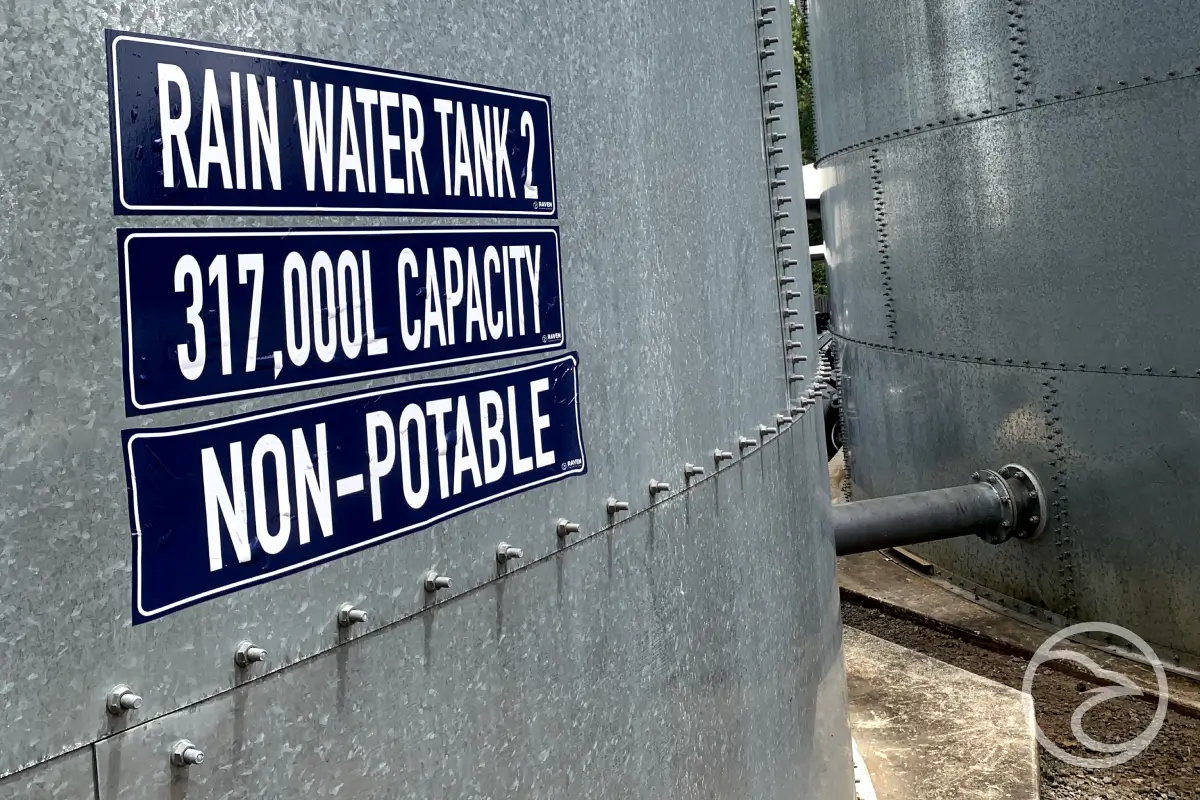
The report should clearly identify the inspected fire water tank.
Relevant information may include:
-
Facility name and address.
-
Tank identification number.
-
Tank location within the property.
-
Tank construction material.
-
Tank configuration and dimensions.
-
Available storage capacity information.
-
Intended fire protection application.
Accurate identification is especially important for facilities operating multiple water storage tanks. Without this information, maintenance teams may struggle to associate findings with the correct equipment.
The report should distinguish verified specifications from information supplied by the property owner.
2. Inspection Date and Personnel
Every report should identify when the inspection occurred. It should also record the organization and personnel responsible for the assessment.
This information helps establish accountability and supports future communication. Facility managers may need to contact the inspection provider for clarification or additional documentation.
3. Inspection Scope and Methods
The inspection scope explains which components were examined and which methods were used. Different inspection techniques provide different types of information.
Common methods include:
-
Exterior visual inspections.
-
Internal visual assessments.
-
Remotely operated vehicle inspections.
-
Diver-assisted inspections.
-
Photographic documentation.
-
Measurements and specialized testing.
Not every inspection includes all these methods. The report should accurately describe the procedures performed. It should also distinguish visual observations from measurements and functional testing.
4. Inspection Limitations
Inspection limitations are an important part of reliable reporting. Certain areas may be difficult to access because of tank geometry or internal equipment. Underwater visibility may also be restricted by sediment or water conditions.
The report should identify areas that could not be adequately examined. This prevents facility managers from assuming that every component received a complete assessment.
Exterior and Interior Tank Condition Findings
A fire water tank inspection report should organize findings according to the components examined. Separating exterior and interior observations helps facility managers understand the location and nature of identified problems.
Exterior Tank Condition
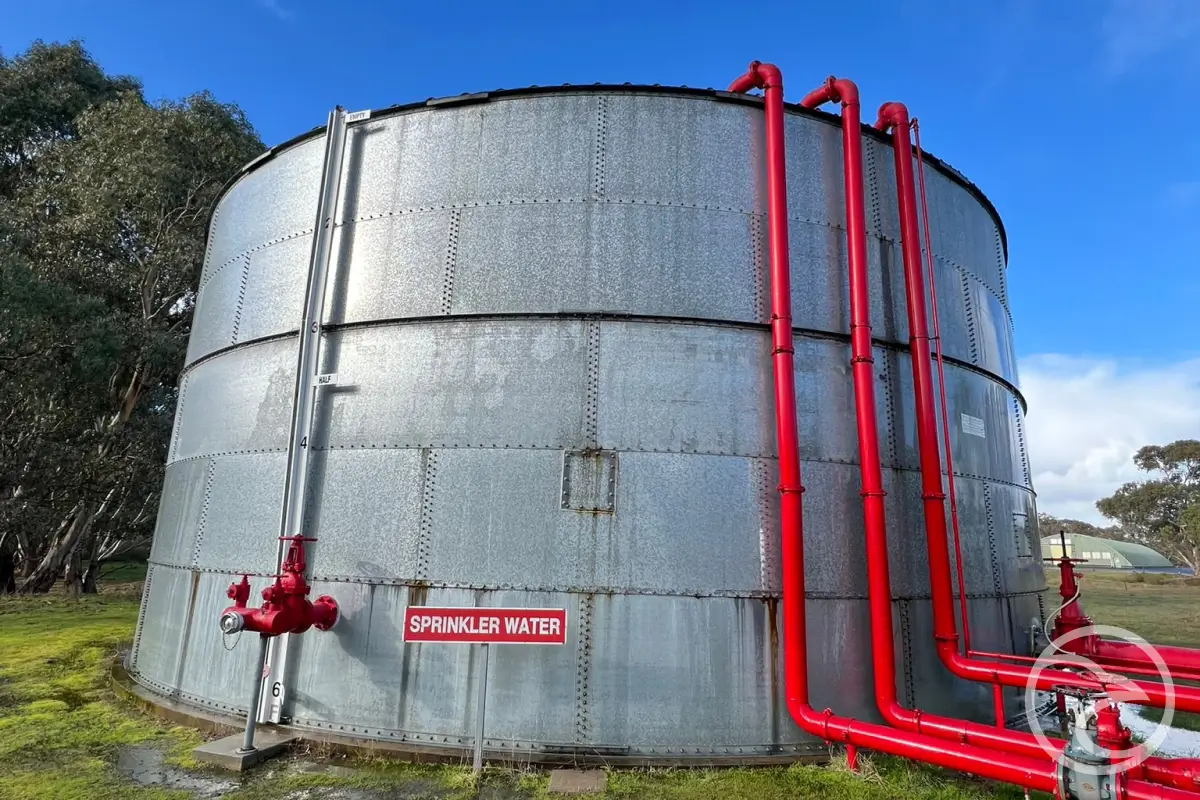
Exterior inspections may identify deterioration affecting visible tank components.
The report may document:
-
Corrosion on steel surfaces.
-
Damaged protective coatings.
-
Visible deformation.
-
Evidence of leakage.
-
Roof deterioration.
-
Damaged access equipment.
-
Deteriorated connections.
-
Signs of foundation movement.
-
Obstructions around the tank.
Each finding should include a clear description and location. Inspectors should avoid making unsupported conclusions about the cause or severity of damage.
For example, surface staining may indicate moisture exposure without confirming an active leak. Further investigation may be necessary to determine the underlying problem.
Interior Tank Condition
Internal inspections provide information about conditions that may not be visible from outside.
Depending on the inspection method, inspectors may observe:
-
Internal corrosion.
-
Protective coating deterioration.
-
Tank liner damage.
-
Sediment accumulation.
-
Damaged internal components.
-
Unusual deposits or staining.
-
Suspected leakage points.
-
Deterioration around connections.
These observations can help identify areas requiring maintenance or further assessment. For lined tanks, the report may describe visible tears, wrinkles, displacement, or suspected seam deterioration.
However, visual inspection alone may not confirm whether the lining remains completely watertight. Additional testing may be required.
For more details on identifying liner damage and potential warning signs, see our fire tank lining inspection checklist.
Roof and Structural Observations
Tank roofs protect stored water from environmental contamination and exposure. They also contain components that may deteriorate over time. Inspection findings may include corrosion, damaged roof panels, or deterioration around penetrations.
Visible deformation or unusual movement may indicate the need for structural assessment. Inspectors should document these conditions without assigning unsupported structural conclusions.
Where necessary, the report should recommend evaluation by a qualified specialist.
Water Level and Associated Components
Inspection reports may also document observations involving accessible equipment connected to the tank.
Relevant components include:
-
Water level indicators.
-
Overflow pipes.
-
Tank vents.
-
Protective screens.
-
Accessible valves.
-
Pipe connections.
-
Heating equipment where installed.
These components support the operation and protection of the water storage system. However, a visual inspection does not automatically confirm functional performance.
The report should identify whether components were visually examined, tested, or excluded from the assessment.
Photographic Evidence and Defect Documentation
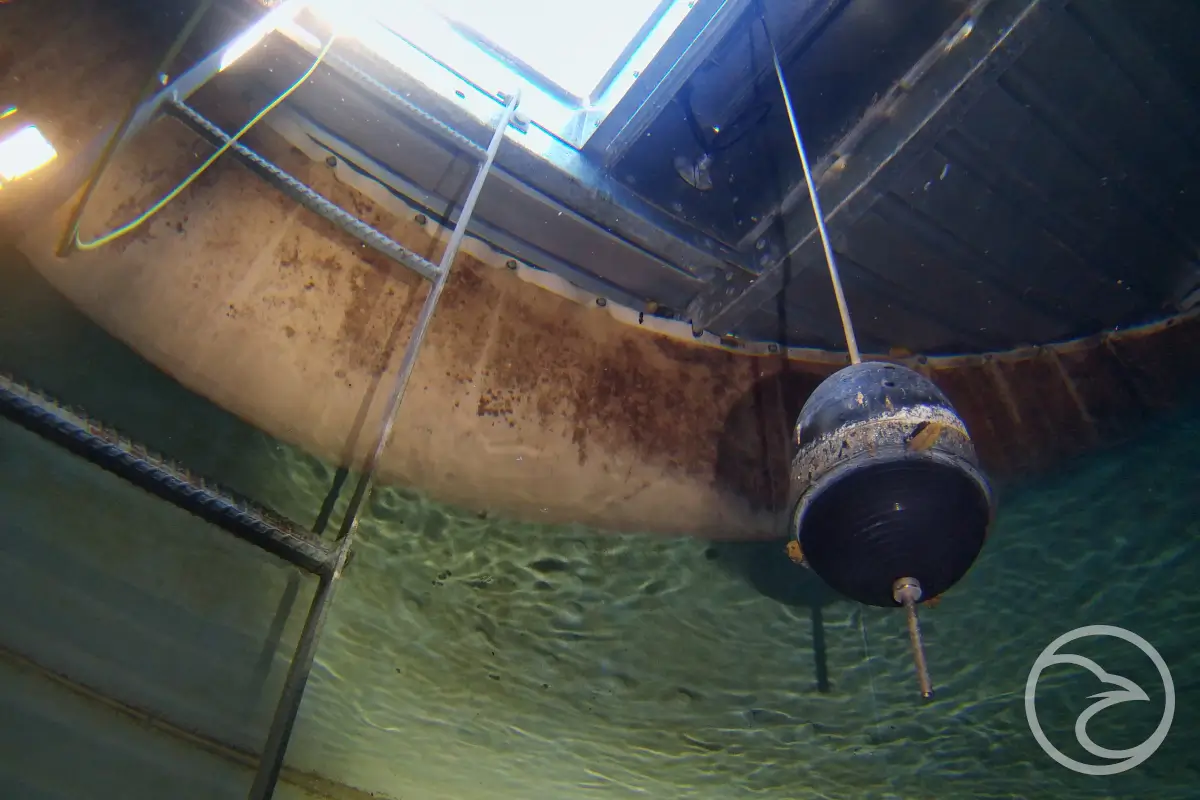
Photographs provide valuable supporting evidence in a fire water tank inspection report. They help facility managers understand conditions that may be difficult to describe using text alone.
Photographic records also support comparisons during future inspections.
What Inspection Photographs Should Show
Inspection photographs may document:
-
General tank condition.
-
Corrosion and surface deterioration.
-
Damaged protective coatings.
-
Tank liner defects.
-
Roof damage.
-
Deteriorated connections.
-
Sediment accumulation.
-
Areas requiring further investigation.
Images should be clear enough to support the associated observations. Where practical, each photograph should include a reference number and location description.
For example, a photograph may identify corrosion near a specific tank wall connection. This provides more useful information than a general caption describing surface damage.
Why Defect Locations Matter
Defect locations help maintenance teams identify areas requiring attention. Depending on the tank configuration, inspectors may use panel numbers, reference points, or component descriptions.
Consistent references also help future inspectors locate previously documented problems. This supports more reliable comparisons over time.
Documenting Defect Severity
Inspection reports should explain the potential significance of identified conditions. However, severity classifications must reflect the available evidence and applicable criteria.
Not every visible defect represents an immediate threat to system operation. Similarly, some apparently minor conditions may require prompt investigation.
Inspectors should distinguish observed damage from confirmed performance limitations. Where the evidence is insufficient, additional assessment should be recommended.
How Deficiencies and Impairments are Reported
Deficiencies and impairments are important concepts in fire protection system management. They should not be treated as interchangeable terms. A deficiency identifies a condition requiring correction or further attention.
An impairment involves a condition affecting the intended operation of a fire protection system or component. Formal classifications should follow the applicable NFPA 25 requirements.
Describing a Deficiency
A clear deficiency description should identify:
-
The affected component.
-
The observed problem.
-
The location of the condition.
-
Supporting photographs or measurements.
-
The potential concern.
-
Recommended corrective actions.
For example, an inspection may identify visible corrosion around a tank outlet connection. The report should describe the corrosion and recommend further evaluation where necessary.
It should not claim that the connection has failed without supporting evidence.
Identifying Potential Impairments
Certain findings may indicate that a fire protection system cannot provide its intended level of protection. These conditions require careful evaluation.
Examples of potentially significant findings include:
-
Substantial loss of stored water.
-
Conditions affecting water supply availability.
-
Confirmed failure of critical equipment.
-
Serious structural damage.
-
Problems preventing intended system operation.
These examples do not automatically establish a formal impairment classification. The actual system condition and applicable requirements determine the appropriate response.
When an impairment is identified, relevant notification and management procedures should be followed. The report should document the condition and actions taken.
Corrective Action Recommendations
Inspection recommendations should help facility managers understand the next steps.
Depending on the findings, recommendations may include:
-
Repairing damaged components.
-
Investigating suspected leakage.
-
Evaluating corrosion severity.
-
Assessing protective lining condition.
-
Conducting additional testing.
-
Obtaining a structural engineering assessment.
-
Reinspecting affected areas after repairs.
Recommendations should be based on the inspection findings. Where additional information is required, the report should explain why further assessment is necessary.
NFPA 25 Documentation Considerations
NFPA 25 establishes requirements for inspection, testing, and maintenance of water-based fire protection systems. The standard also addresses documentation and recordkeeping responsibilities.
The 2026 edition is the latest published edition of NFPA 25 as of November 2026. However, jurisdictions may adopt earlier editions or establish additional requirements.
Facility managers should verify which edition applies to their property.
Information Included in Inspection Records
Applicable NFPA 25 recordkeeping provisions address information such as:
-
Inspection or testing activities performed.
-
The organization responsible for the work.
-
Required inspection or testing frequency.
-
Inspection dates.
-
Results and identified conditions.
-
Responsible personnel and relevant contact information.
Additional documentation may include photographs, measurements, and detailed condition assessments. These records help establish what work occurred and which issues were identified.
The precise documentation requirements depend on the applicable standard and local regulations.
Property Owner Responsibilities
Property owners are responsible for maintaining applicable inspection, testing, and maintenance records. Records should remain accessible for future inspections and regulatory reviews.
Facility managers should organize documentation by tank, inspection date, and assessment type. Associated maintenance and corrective action records should also be retained.
Retention periods depend on the applicable requirements and record type.
Inspection Reports and Compliance
An inspection report does not automatically establish complete compliance with every applicable fire protection requirement. Some inspections have a limited scope. Certain components may require separate testing or additional evaluation.
Other requirements may concern the broader fire protection system. Facility managers should review inspection findings alongside applicable standards and maintenance records.
Professional fire tank inspections can provide valuable information about tank condition and potential maintenance needs.
How Facility Managers Should Review Inspection Results
Receiving an inspection report is only the beginning of effective tank management. Facility managers should review the findings and determine which actions are necessary.
A structured approach helps prevent important issues from being overlooked.
Confirm the Inspection Scope
Start by identifying which components were examined. Determine whether the inspection covered exterior structures, internal surfaces, or associated equipment.
Review any limitations involving access or visibility. This helps establish what the report can reliably confirm.
Identify Significant Findings
Review the documented deficiencies and potential impairments. Pay particular attention to conditions affecting water availability or structural integrity.
The report should distinguish urgent concerns from routine maintenance observations. If a finding is unclear, request clarification from the inspection provider.
Review Supporting Evidence
Examine photographs, measurements, and defect descriptions. Check whether the supporting evidence explains the reported conclusions.
For example, visible corrosion may justify further testing without establishing the need for complete replacement. A clear report should explain the reason for recommended follow-up work.
Establish Follow-Up Responsibilities
Assign responsibility for reviewing and addressing each relevant finding. Depending on the problem, this may involve maintenance personnel, contractors, engineers, or fire protection specialists.
Document completed actions and retain supporting records. Where required, arrange verification after corrective work.
Compare Previous Inspection Reports
Historical inspection reports can reveal recurring problems or developing deterioration. Compare photographs and observations from earlier assessments.
Look for changes in defect location, extent, or apparent severity. Where measurements are available, review them alongside visual findings. These comparisons help identify areas requiring closer monitoring.
When Inspection Findings Require Further Assessment
Some inspection findings cannot be resolved through routine maintenance alone. Additional testing or specialist evaluation may be necessary.
Suspected Structural Deterioration
Visible deformation, severe corrosion, or unusual movement may indicate structural concerns. These conditions can require assessment by qualified specialists.
The inspection report should describe the observed damage and recommend appropriate next steps. It should not assign remaining structural capacity without supporting analysis.
Recurring Water Leakage
Repeated leakage may indicate problems involving tank walls, connections, or protective linings. Inspection reports should document visible evidence and suspected locations.
Further testing may be necessary to identify the source. The appropriate repair method depends on the confirmed cause.
Liner or Coating Damage
Protective linings and coatings may deteriorate through aging, exposure, or mechanical damage. Inspectors may identify visible tears, coating separation, or other defects.
However, the full extent of deterioration may not be apparent during visual assessment. Additional evaluation can help determine whether localized repairs or more extensive work is appropriate.
Incomplete Internal Visibility
Some fire water tanks can undergo underwater inspection while remaining filled. However, sediment, water clarity, and internal structures may restrict visibility.
The inspection report should clearly identify areas that could not be examined. Additional assessment may involve another inspection method or further preparation.
A reliable report should explain these limitations rather than present incomplete findings as conclusive.
Conclusion
A fire water tank inspection report should provide a clear and reliable record of the tank’s observed condition. It should identify inspected components, describe defects, and document important limitations.
Photographs, location references, and corrective action recommendations help facility managers understand the findings. Detailed documentation also supports maintenance planning, regulatory recordkeeping, and future inspections.
Understanding inspection results allows property owners to make more informed decisions about their fire protection water storage systems. Inspection findings help facility managers identify deterioration, evaluate maintenance needs, and plan appropriate corrective actions.