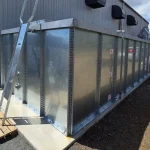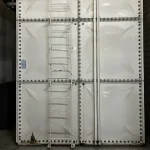
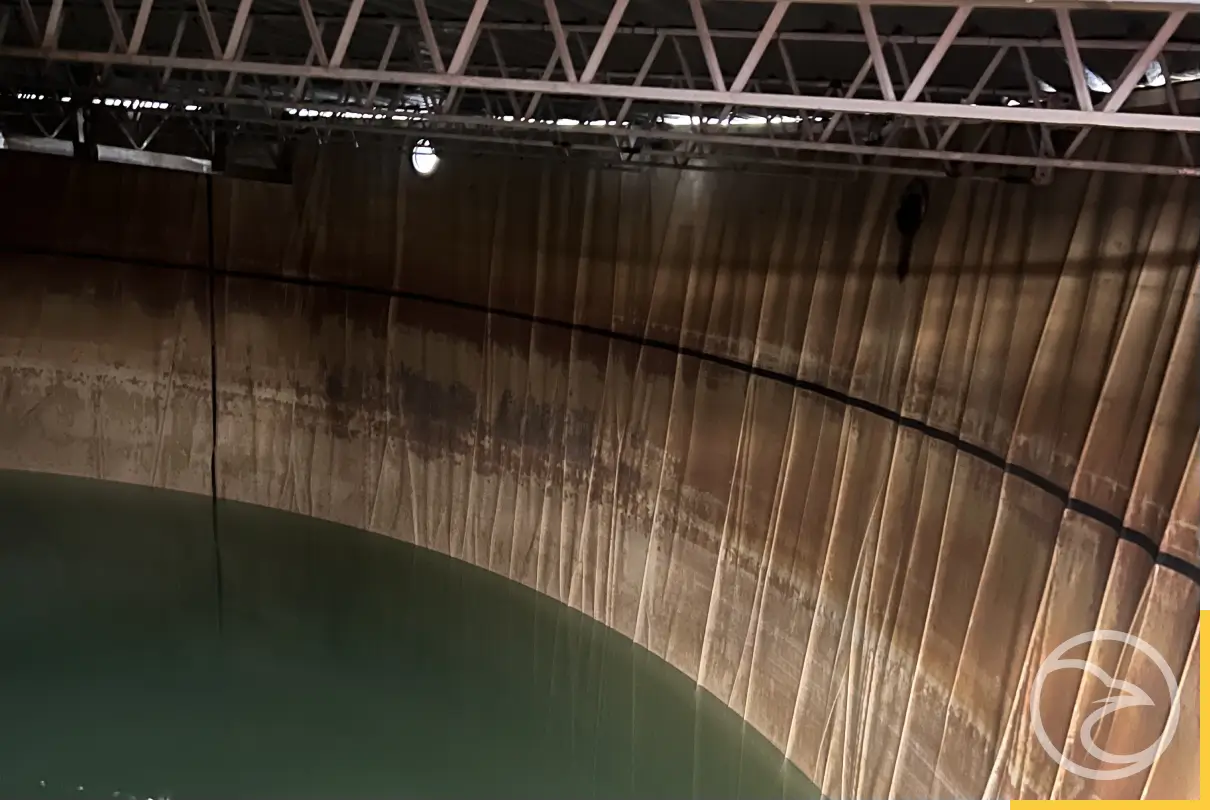
Large water storage panel tanks can hold significant volumes of water for extended periods. This storage capacity supports buildings, industrial facilities, utilities, fire systems, and many other applications. However, storing water is not simply about keeping a tank full.
Water must also move through the tank at an appropriate rate. Without regular movement, stored water can remain inside the tank for too long. This condition increases water age and can create stagnant areas.
Poor turnover may eventually affect water quality and complicate tank maintenance. Regular water turnover is therefore an important part of responsible storage tank operation.
Understanding how turnover works can help operators reduce stagnation and maintain more stable storage conditions.
What is Water Turnover in a Storage Tank?
Water turnover describes the replacement of stored water with incoming fresh water. Water enters the tank, remains stored temporarily, and later leaves through the outlet. New water then replaces the discharged volume.
This repeated process creates a normal fill-and-draw cycle. Turnover is closely connected with another important concept called water age. Water age describes how long water remains within a storage tank or distribution system.
Higher turnover generally helps reduce water age. Low turnover can allow some water to remain stored much longer. However, turnover and mixing are not exactly the same process.
A tank may receive new water without mixing its entire stored volume. Fresh water may travel directly from the inlet towards the outlet. Meanwhile, other areas may experience very little movement.
These areas are often described as stagnant zones or dead zones. Effective tank management therefore requires both sufficient turnover and appropriate mixing.
Different uses of industrial water panel tanks can affect water demand, storage duration, and the turnover strategy required for effective tank management.
Why is Regular Water Turnover Important?
Stored water changes over time. Its temperature can change, disinfectant residuals can decline, and sediments can accumulate. Microbiological activity may also become more significant under unsuitable storage conditions. Regular turnover helps limit excessive water age.
It also encourages the replacement of older water with newer incoming water. For potable water systems, this process can support more consistent water quality. Turnover is also important for operational reasons.
A tank should function as an active part of the water system. It should not simply hold a large volume that rarely moves. Regular cycling allows operators to manage storage while still maintaining necessary reserve capacity.
The correct balance depends on the tank and its purpose.
How Does Water Turnover Work?
Tank turnover occurs through normal changes in stored water volume. When demand increases, water leaves the tank. When the tank refills, new water enters.
The difference between high and low operating levels determines how much water is exchanged. Consider a tank that remains almost completely full every day. Only a small percentage of its stored volume may leave during normal operation.
The same water can therefore remain inside for extended periods. Now consider a tank with greater controlled level variation. A larger proportion of stored water leaves and is replaced.
This creates greater turnover. However, greater level variation alone does not guarantee complete mixing. Tank geometry, inlet position, outlet position, flow velocity, and temperature differences also affect water movement.
For this reason, turnover should be considered alongside the tank’s hydraulic behaviour.
Water Turnover and Water Mixing
Turnover replaces stored water. Mixing distributes incoming water throughout the stored volume. Both processes are important.
Poor mixing can create zones where older water remains isolated. This can happen even when the overall turnover rate appears acceptable. Temperature differences can make the problem worse.
Warmer and colder water can form separate layers inside a tank. This process is known as thermal stratification. Water within these layers may not mix effectively.
Inlet and outlet arrangements can also influence circulation. Poor configurations may encourage short-circuiting. Short-circuiting occurs when incoming water reaches the outlet without adequately mixing with older stored water.
The tank may appear operational while some areas receive limited circulation.
Which Panel Tanks can be Affected?
Turnover should be considered in most large water storage systems. The issue is particularly relevant where stored volumes are high compared with normal water demand.
Examples can include:
- Potable water storage tanks.
- Commercial water storage tanks.
- Industrial process water tanks.
- Municipal water storage facilities.
- Sectional panel tanks.
- GRP or FRP panel tanks.
- Steel panel tanks.
- Hot-dipped galvanised panel tanks.
- Stainless steel water tanks.
- Emergency water storage tanks.
- Large building water storage systems.
- Tanks supplying institutional facilities.
The operating requirements can vary significantly between these applications. Potable water tanks require particular attention because stored water may eventually reach consumers.
Industrial systems may have different water quality requirements. Emergency storage creates another challenge.
Large reserves may be required, while normal daily demand remains relatively low. Operators must therefore balance reserve capacity with appropriate water management.
Why Large Tanks can Experience Low Turnover
Tank size should match the actual requirements of the system. Oversized tanks can create unnecessary water age. A facility may need only a small portion of its total storage during normal daily operation.
The remaining water may stay inside for much longer. Low turnover can also develop after operating conditions change. A tank may originally have been designed for much higher demand.
Demand may later fall because of equipment changes or reduced building occupancy. System extensions may also change how water moves through existing tanks.
Common causes of poor turnover include:
- Oversized storage capacity.
- Low daily water demand.
- Small fluctuations in operating water levels.
- Poor inlet and outlet configuration.
- Inadequate mixing.
- Changes in system demand.
- Seasonal reductions in water use.
- Incorrect pump control settings.
- Hydraulic short-circuiting.
- Temperature stratification.
- Long periods between significant drawdown events.
Identifying the actual cause is important before choosing a solution.
What is Water Stagnation?
Water stagnation occurs when water experiences little movement for an extended period. Stagnation does not always affect the entire tank. It may develop only within specific areas.
Corners, upper layers, remote sections, or poorly circulated zones can retain older water. Large tanks can therefore contain water of different ages simultaneously.
Average water age alone may not reveal these local conditions. This is why tank assessment should consider actual circulation patterns.
Operators should look for conditions that encourage stagnant zones.
What can Happen when Water Remains Stagnant?
Excessive water age can contribute to several water quality concerns. The exact effects depend on water chemistry, temperature, tank materials, and treatment methods. One important issue is disinfectant decay.
Residual disinfectants do not remain at their original concentration indefinitely. Long storage periods can therefore reduce residual levels.
This can create less favourable microbiological conditions. Bacterial regrowth can become a greater concern when water age increases. Biofilms may also develop on submerged surfaces.
It can interact with water and accumulated deposits. Sediment is another concern. Particles can gradually settle on the tank floor.
Sediment may contain mineral deposits and other material carried into the tank. Low-flow areas allow these materials to remain largely undisturbed.
Other possible consequences include:
- Reduced disinfectant residual.
- Increased bacterial regrowth risk.
- Biofilm development.
- Taste and odour problems.
- Temperature stratification.
- Localised water quality differences.
- Increased sediment accumulation.
- Discolouration under certain conditions.
- Increased maintenance requirements.
- Greater difficulty maintaining consistent stored water quality.
These problems do not develop identically in every tank. However, excessive water age increases the importance of monitoring and corrective management.
Signs that Turnover may be Insufficient
Poor turnover is not always immediately visible. A tank can look normal externally while experiencing circulation problems internally.
Operators should therefore review both operational data and water quality information.
Possible warning signs include:
- The tank remains near maximum level for long periods.
- Daily level fluctuations are very small.
- Stored water shows significant temperature differences.
- Disinfectant residual declines inside the tank.
- Water quality varies between sampling locations.
- Sediment accumulation increases.
- Taste or odour complaints appear.
- Water demand is much lower than the tank’s capacity.
- Some areas of the tank rarely receive fresh water.
- Monitoring indicates excessive water age.
One sign alone does not prove stagnation. A combination of hydraulic and water quality information provides a better assessment.
How Much Turnover does a Large Tank Need?
There is no single turnover rate suitable for every storage tank. The appropriate rate depends on several operating factors. These include tank volume, daily demand, water quality, temperature, and treatment processes.
Tank configuration and required emergency storage must also be considered. A commonly referenced starting point for treated water storage is complete turnover within several days. However, this should not be treated as a universal rule.
Individual tanks should have turnover targets based on their actual operating conditions. A smaller tank with high demand may naturally experience frequent turnover.
A large emergency reserve tank may require a different operating strategy. The objective is to prevent unnecessarily high water age without compromising storage requirements.
How can Poor Water Turnover be Improved?
The first step is understanding why water remains inside the tank too long. Simply increasing flow may not solve every problem.
The entire storage system should be reviewed.
1. Review Actual Water Demand
Compare tank capacity with current daily demand. Historical design assumptions may no longer reflect actual water use.
This comparison can reveal whether storage capacity is significantly oversized.
2. Adjust Operating Levels
Changing normal high and low water levels can increase daily volume exchange. Greater controlled drawdown can help replace more stored water.
However, required reserve volumes must always be maintained.
3. Review Pump Controls
Pump start and stop settings influence tank cycling. Incorrect settings may keep a tank unnecessarily full.
Control adjustments can sometimes increase turnover without physical tank modifications.
4. Improve Inlet and Outlet Arrangements
The position of connections strongly influences water movement. Separate inlet and outlet locations can encourage circulation in suitable tank designs.
The correct arrangement depends on tank geometry and system hydraulics.
5. Improve Mixing
Some tanks may benefit from passive or active mixing systems. Passive systems use incoming flow to improve circulation.
Active systems use dedicated equipment to move stored water. Mixing can help reduce stratification and stagnant zones.
6. Use Hydraulic Assessment
Complex systems may require hydraulic modelling. Modelling can estimate water age and identify areas with poor circulation.
More detailed assessments may use computational fluid dynamics. These tools can support decisions before expensive modifications are made.
Preventive Measures for Water Stagnation
Preventing stagnation is generally easier than correcting established water quality problems. A preventive programme should combine operation, monitoring, inspection, and maintenance.
Useful measures include:
- Establishing appropriate tank operating levels.
- Tracking filling and emptying cycles.
- Monitoring water age where practical.
- Checking disinfectant residuals in potable systems.
- Monitoring water temperature.
- Reviewing seasonal changes in demand.
- Inspecting tank condition regularly.
- Monitoring sediment accumulation.
- Maintaining valves, pumps, and level controls.
- Checking inlet and outlet performance.
- Reviewing mixing effectiveness.
- Scheduling appropriate tank cleaning.
Records are particularly useful.
Trends may reveal gradual changes before they become significant operational problems.
Why Tank Maintenance Matters
Water turnover cannot be separated from general tank maintenance. A well-cycled tank can still develop problems if its physical condition is neglected.
Regular inspections help identify defects that may affect stored water or tank performance.
Inspection programmes may consider:
- Internal panel condition.
- External panel condition.
- Roof condition.
- Access hatches.
- Vents and screens.
- Overflow arrangements.
- Seals and joints.
- Internal supports.
- Ladders and access equipment.
- Pipe connections.
- Coatings and corrosion protection.
- Signs of leakage.
- Sediment levels.
- Evidence of biological growth.
The exact inspection schedule should reflect tank materials, water use, regulations, and site conditions. Maintenance records should also be retained.
A planned water tank maintenance programme can support effective turnover, regular inspections, cleaning, and long-term tank performance.
The Role of Tank Cleaning
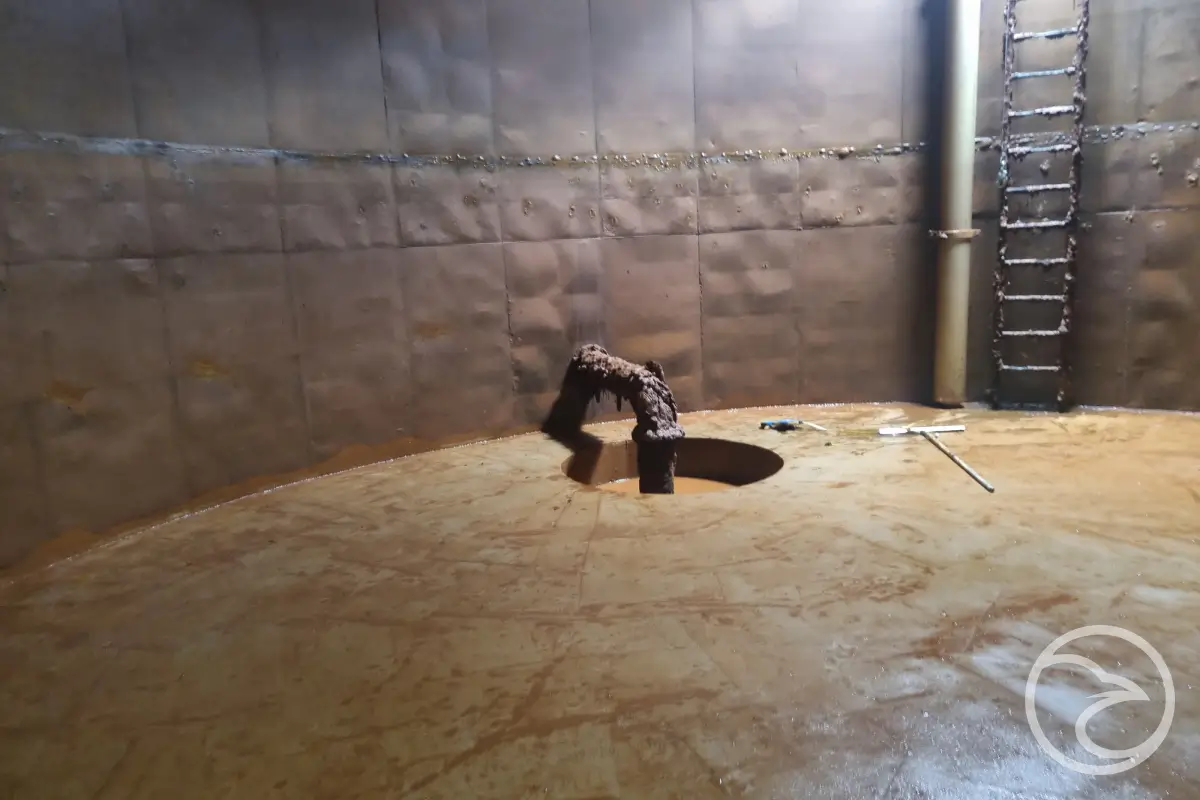
Turnover moves water through a tank. It does not automatically remove all settled material. Sediment can remain on the tank floor despite regular filling and draining. Biofilm can also remain attached to internal surfaces.
This is why cleaning remains an important part of tank management. Cleaning removes accumulated deposits that normal hydraulic operation cannot eliminate.
The required cleaning frequency depends on actual tank conditions.
Factors can include:
- Water source.
- Sediment loading.
- Tank material.
- Water temperature.
- Tank age.
- Inspection findings.
- Previous cleaning history.
- Water quality requirements.
Cleaning should therefore be condition-based and supported by appropriate inspection.
What Does Tank Cleaning Involve?
Cleaning methods depend on tank design and stored water requirements. A tank may need to be isolated and drained before internal cleaning. Sediment can then be removed from the floor and other surfaces.
Internal surfaces should be inspected while accessible. This allows maintenance teams to identify corrosion, coating damage, seal problems, or structural deterioration. Potable water tanks require additional hygiene controls.
Cleaning equipment and procedures should avoid introducing contamination. Disinfection may also be required before the tank returns to service.
The applicable water authority and standards should guide these procedures. Regular maintenance should also include effective vermin proofing to help prevent insects, rodents, birds, and other pests from contaminating stored water.
What Should be Done if Stagnation has Already Occurred?
Suspected stagnation should be investigated before normal operation simply continues. The first priority is determining the extent of the problem. Operators should review tank levels, turnover history, demand, and water quality data.
Sampling may be required for potable water systems. The exact testing programme depends on the system and applicable requirements.
Possible corrective actions include:
- Assess current water quality.
- Identify areas with limited circulation.
- Review recent tank operating records.
- Check pumps, valves, and level controls.
- Increase controlled turnover where appropriate.
- Review inlet and outlet hydraulics.
- Assess whether additional mixing is required.
- Inspect for sediment and biofilm.
- Clean the tank when conditions require it.
- Disinfect the tank when required.
- Verify water quality before normal service resumes.
- Update the operating strategy to prevent recurrence.
Potable water concerns should be managed under appropriate water safety procedures. Water should not be assumed safe simply because it looks clear.
Cleaning Alone may not Solve the Problem
Cleaning can remove accumulated sediment and biofilm. However, it does not correct the hydraulic cause of stagnation. A cleaned tank can develop the same problem again.
This happens when operating conditions remain unchanged. For example, an oversized tank may still experience very low daily drawdown. Poorly positioned connections may continue creating dead zones.
Thermal stratification may also return. Cleaning should therefore form part of a broader corrective strategy.
That strategy should address both tank cleanliness and water movement.
Maintenance and Turnover Should Work Together
Effective tank management combines several activities. Turnover manages water age. Mixing reduces localised stagnant zones.
Monitoring identifies changing water quality. Inspection identifies physical deterioration. Cleaning removes accumulated material. Maintenance keeps the tank and its components operating correctly.
None of these measures should be considered completely independently. For example, a failed level sensor can affect cycling. A poorly operating valve can reduce expected flow.
Sediment can indicate a need for more frequent inspection or cleaning. A damaged vent screen can create a separate contamination pathway.
A comprehensive maintenance programme connects these observations.
Developing a Water Turnover Management Plan
Large tank operators can benefit from a documented turnover management plan. The plan does not need to be unnecessarily complicated.
It should explain how the tank normally operates and how performance is checked.
A useful plan can include:
- Tank capacity and normal operating volume.
- Required reserve storage.
- Expected daily demand.
- Normal high and low water levels.
- Typical fill and draw cycles.
- Water quality monitoring requirements.
- Inspection schedules.
- Cleaning schedules.
- Maintenance responsibilities.
- Procedures for abnormal conditions.
- Corrective actions for suspected stagnation.
- Records of previous problems and repairs.
The plan should be reviewed when system conditions change. A major change in demand can make an old operating strategy unsuitable.
Seasonal Changes Should not be Ignored
Water demand is rarely constant throughout the year. Some facilities experience large seasonal variations. Demand may fall during holidays, shutdowns, colder periods, or reduced occupancy.
The tank may then experience lower turnover than expected. Temperature changes can also influence mixing behaviour. Operators should therefore consider seasonal operating strategies.
Tank levels and cycling patterns may need adjustment during periods of reduced demand. Any adjustment must still protect required emergency and operational storage.
The Importance of Monitoring
Turnover problems are easier to manage when operators have reliable information. Tank level data provides a useful starting point. It shows how much stored volume actually changes during normal operation.
Flow records can provide additional information. Water quality monitoring can then show whether operational conditions are affecting stored water. For potable water systems, monitoring requirements may include disinfectant residual and microbiological parameters.
Temperature measurements can also help identify stratification. The appropriate parameters depend on the water system and regulatory requirements. Monitoring should focus on trends rather than isolated measurements.
A gradual decline can provide an early warning of changing tank conditions. Scheduled tank inspection services can support effective maintenance by identifying structural defects, sediment buildup, and areas requiring cleaning or repair.
Regular Turnover Supports Long-Term Tank Management
Large panel tanks are designed to provide reliable storage. That storage remains useful only when the water and tank are managed correctly. Regular water turnover helps control water age.
Effective mixing reduces the possibility of isolated stagnant zones. Inspection and monitoring help identify developing problems. Cleaning removes sediment and deposits that normal turnover cannot eliminate.
Maintenance keeps structural and hydraulic components functioning correctly. Together, these activities support more consistent storage conditions and better asset management. The appropriate turnover strategy should always reflect the individual tank.
Tank size, purpose, demand, water quality, temperature, and reserve requirements all matter. Effective mixing reduces the possibility of isolated stagnant zones. Inspection and monitoring help identify developing problems. Cleaning removes sediment and deposits that normal turnover cannot eliminate.
Maintenance keeps structural and hydraulic components functioning correctly. Together, these activities support more consistent storage conditions and better asset management. The appropriate turnover strategy should always reflect the individual tank.
Tank size, purpose, demand, water quality, temperature, and reserve requirements all matter.